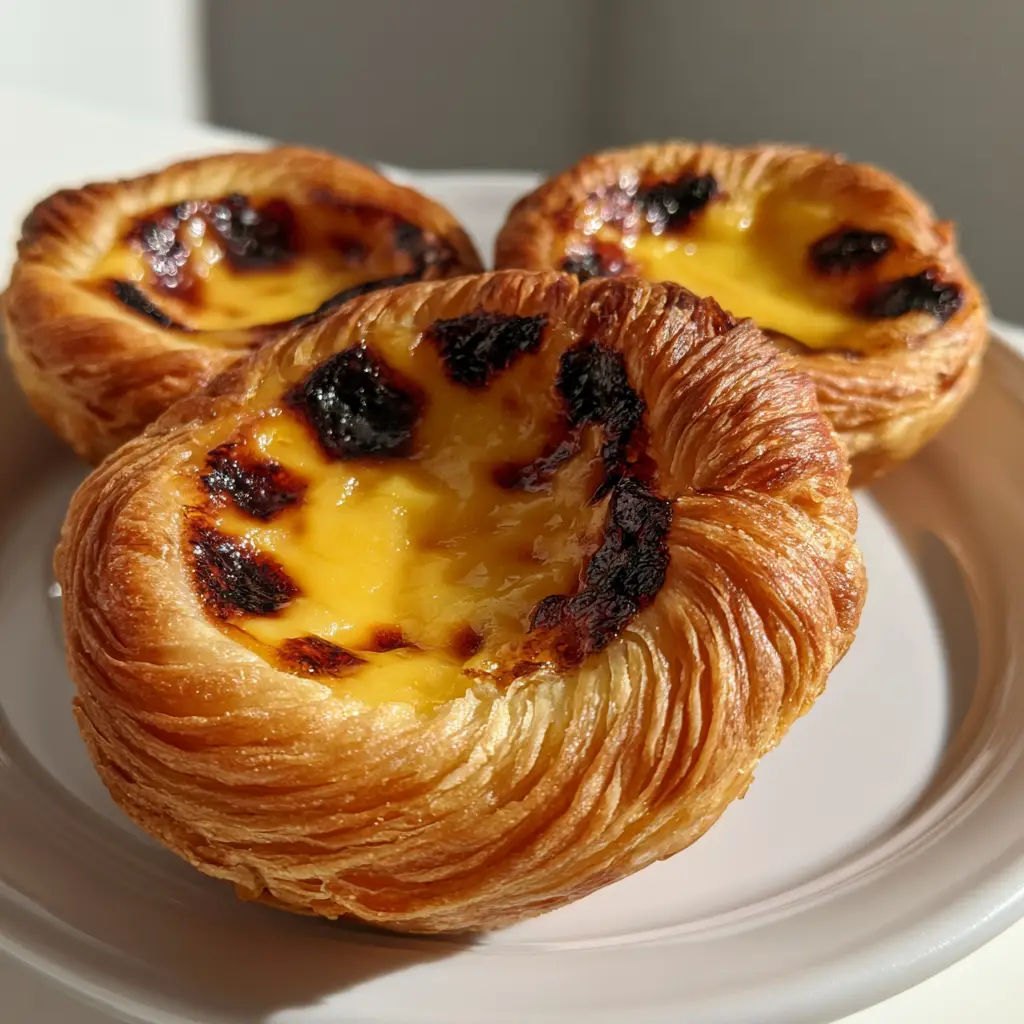
This Pastel de Nata Recipe is the only guide you need to recreate the legendary, world-famous custard tarts of Lisbon right in your own kitchen. There is nothing quite like the sensory experience of biting into a warm, flaky, spiralized puff pastry crust that shatters perfectly, only to meet a silky, creamy yellow egg custard center topped with those iconic caramelized charred spots.
If you have ever wandered through the streets of Belém, the scent of cinnamon and scorched sugar is unmistakable. With this professional-grade Pastel de Nata Recipe, we are bringing that exact bakery-style quality to your home. We have meticulously tested the ratios to ensure your crust has that signature multi-layered spiral and your custard achieves the perfect level of sweetness without being cloying.
Why This Is The Only Pastel de Nata Recipe You Will Ever Need
- The Signature Spiral: Our technique ensures a golden-brown, multi-layered spiral puff pastry crust that is visibly flaky and stays crisp for hours.
- Professional Char: We share the secret to achieving those distinct dark brown and black charred caramelized spots using a standard home oven.
- Velvety Texture: The custard is thickened using a traditional flour-and-milk roux method, resulting in a thick, smooth yellow egg custard that melts in your mouth.
- Pinterest-Perfect Results: Designed to look exactly like a handheld smartphone photo from an artisan Portuguese bakery.
If you love mastering international bakery classics, you might also enjoy our crispy apple pie egg rolls or our decadent strawberry stuffed French toast for your next weekend brunch.
Essential Components for the Perfect Portuguese Tart
High-Quality All-Purpose Flour: You need 2 cups (250g) of flour for the pastry and a small amount for the custard base to provide structure. Cold Unsalted Butter: You will use 1 cup (225g) of high-fat European-style butter to create those ultra-flaky pastry layers.
Whole Milk: 1 ½ cups (350ml) of whole milk creates the rich, creamy foundation for the custard. Granulated Sugar: 1 ¼ cups (250g) is used to make a simple syrup, which is the secret to the glossy finish of a true Pastel de Nata Recipe.
Large Egg Yolks: You will need 6 large egg yolks to achieve that deep creamy yellow color and rich mouthfeel. Aromatics: One cinnamon stick and a large strip of lemon peel are infused into the syrup for that authentic Lisbon flavor profile.
Fine Sea Salt: Just ½ teaspoon (3g) to balance the sweetness and enhance the buttery notes of the spiralized crust. Water: ¾ cup (180ml) to create the sugar syrup that tempers the egg yolks.
Mastering the Multi-Layered Spiral Crust
Creating the Laminated Dough
Start by mixing your flour, water, and salt until a soft dough forms. Rest the dough for 20 minutes to allow the gluten to relax. This makes the rolling process much easier for your Pastel de Nata Recipe.
Roll the dough into a large square. Spread one-third of your softened butter over two-thirds of the dough. Fold it like a letter. Repeat this process two more times. This “smearing” technique is what creates the visibly flaky and crisp edges.
The Secret Rolling Technique
Once your final layer of butter is applied, roll the dough tightly into a long, slender log. This is the most critical step for the visual blueprint. When you slice this log, you will see a spiralized pastry pattern.
Cut the log into 12-15 equal pieces. Place each piece cut-side down into a muffin tin or traditional tart mold. Use wet thumbs to press the dough from the center upward to the edges. You should see the spiral layers following the shape of the tin.
Developing the Silk-Smooth Egg Custard
Infusing the Flavors
In a small saucepan, combine the sugar, water, cinnamon stick, and lemon peel. Bring to a boil and simmer until it reaches 220°F (105°C). This creates a light syrup that sweetens the custard without making it grainy.
In a separate bowl, whisk ¼ cup (30g) of flour with a splash of the cold milk until a smooth paste forms. Gradually whisk in the remaining milk while heating over medium heat until thickened. This is your custard base.
Tempering and Final Mixing
Slowly pour the hot sugar syrup into the milk mixture in a steady stream, whisking constantly. Once combined, whisk in the 6 large egg yolks. Strain the entire mixture through a fine-mesh sieve to ensure a thick, smooth yellow egg custard texture.
For another creamy dessert that uses a similar stovetop thickening method, check out our cream cheese lemonade pie for a citrusy twist.
Achieving the Iconic Caramelized Char
The High-Heat Bake
Preheat your oven to its highest possible setting, ideally 500°F (260°C) or even 550°F (290°C) if your oven allows. The intense heat is what causes the pastry to puff instantly and the sugars in the custard to bubble and brown.
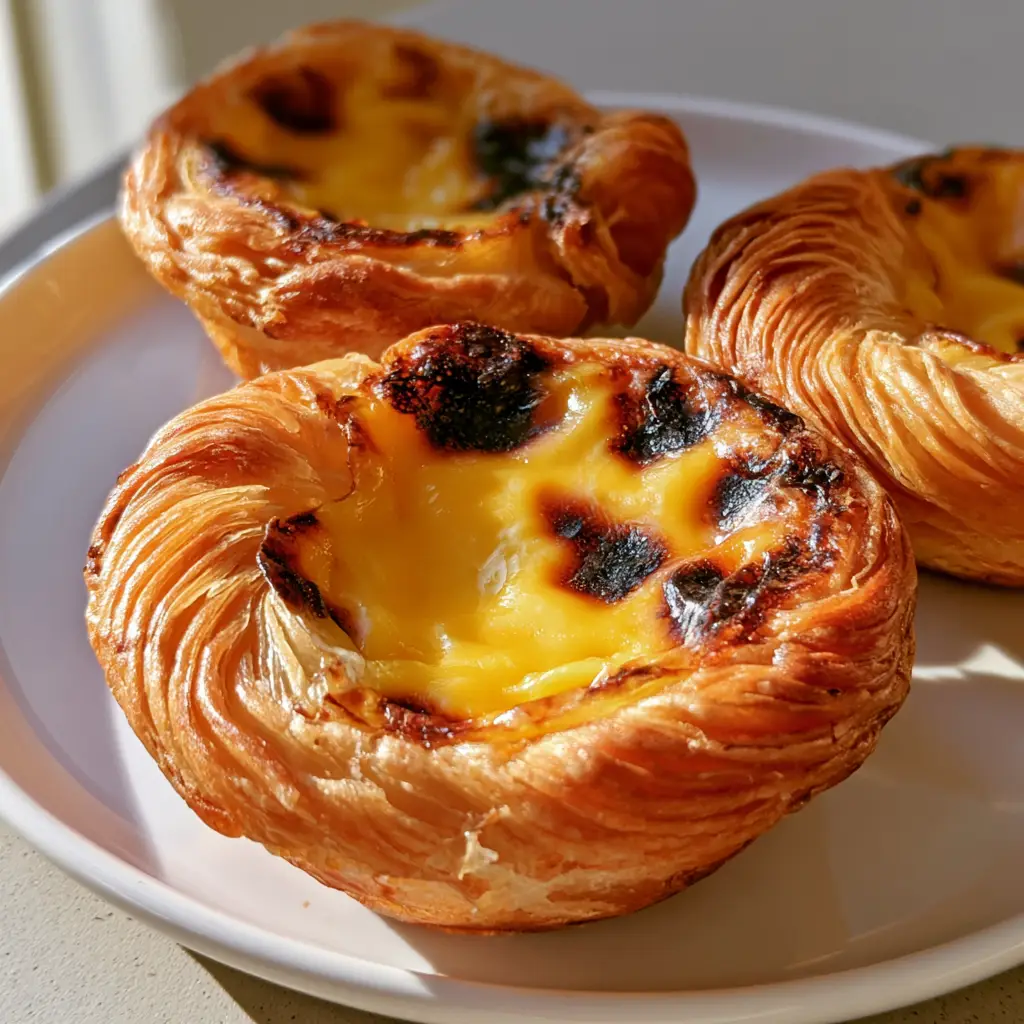
Place the tarts on the top rack. Watch them closely through the oven window. You are looking for the custard to rise like a soufflé and develop distinct dark brown and black charred caramelized spots across the surface.
Cooling for Texture
Bake for 10 to 12 minutes. The edges of the pastry should be a deep golden-brown. Remove from the oven and let them sit in the tin for 5 minutes. As they cool, the custard will settle back down, creating a slightly recessed center perfect for a dusting of cinnamon.
Expert Tips for Success
- Use Room Temp Yolks: This prevents the eggs from curdling when you add the warm syrup, ensuring a smooth yellow custard.
- Don’t Skimp on Butter: The spiralized flaky puff pastry relies on the steam created by the butter layers. Use the best quality you can find.
- The Thumb Trick: Keep a small bowl of water nearby to dip your thumbs in while pressing the dough into the molds; this prevents sticking and keeps the spiral layers clean.
- Maximum Heat: If your oven isn’t hot enough, the pastry will be greasy rather than visibly flaky and crisp. Use a pizza stone if you have one to retain heat.
If you enjoy dough-based projects like this, you might find our sourdough discard flatbread to be a fun and easy way to practice your rolling technique.
Storage, Reheating & Freezing
Room Temperature: These tarts are best enjoyed the day they are made, ideally within a few hours of baking while the crust is at its peak flakiness.
Refrigeration: Store leftovers in an airtight container in the fridge for up to 3 days. Note that the crisp edges will soften slightly in the refrigerator.
Reheating: To restore the crunchy spiralized crust, place the tarts in a 350°F (175°C) oven or air fryer for 5 minutes. Avoid the microwave, as it will make the pastry rubbery.
What to Serve With This Pastel de Nata Recipe
Traditionally, these tarts are served with a Bica (a strong Portuguese espresso) and a light dusting of ground cinnamon and powdered sugar. If you are serving these as part of a larger brunch spread, they pair beautifully with savory dishes like our creamy Delmonico potatoes to balance the sweetness.
Frequently Asked Questions
While you can use it in a pinch, store-bought puff pastry won’t produce the signature ‘spiralized’ bottom. For authentic results, we recommend making the quick laminated dough included in this recipe.
The secret is rolling the dough into a tight log, slicing it into discs, and pressing those discs into the tin. This orientation ensures the layers spiral outward as they bake.
Pastel de Nata uses a sugar syrup-based custard and is baked at very high heat to achieve a charred top, whereas Chinese egg tarts have a smoother, un-charred surface and a slightly different pastry style.
The char comes from high heat and sugar caramelization. Ensure your oven is at least 500°F (260°C) and place the tarts on the highest rack. If needed, you can briefly use the broiler for the last 60 seconds.
Grainy custard usually happens if the eggs scramble or the sugar doesn’t dissolve. Be sure to temper the hot syrup into the milk mixture slowly and always strain through a fine-mesh sieve.
The Authentic Pastel de Nata Recipe
Pastel de Nata Recipe: The Ultimate Guide to Authentic Portuguese Custard Tarts
Ingredients
Equipment
Method
- Mix flour, salt, and water into a dough. Roll into a square and smear with butter. Fold and repeat three times to create flaky layers.
- Roll the dough into a tight log. Slice into 12 pieces and press into muffin tins using wet thumbs to reveal the spiralized pattern.
- Boil sugar, water, cinnamon, and lemon peel until it reaches a light syrup consistency (220°F).
- Whisk 1/4 cup flour with a bit of milk to make a paste. Add to the rest of the milk and heat until thickened. Temper in the syrup and yolks.
- Pour custard into pastry shells. Bake at 500°F (260°C) for 10-12 minutes until the tops have dark brown charred spots and the pastry is golden.
Notes
Always strain your custard through a sieve for a professional silky texture.

Save This Recipe to Pinterest!
Do you want to remember these golden-brown, multi-layered spiral puff pastry tarts? Click the Save button to pin this to your favorite dessert board! If you make this Pastel de Nata Recipe, please leave a 5-star rating in the recipe card above and upload a photo of your charred beauties in the comments below. We love seeing your zoe_chef_Official inspired bakes!