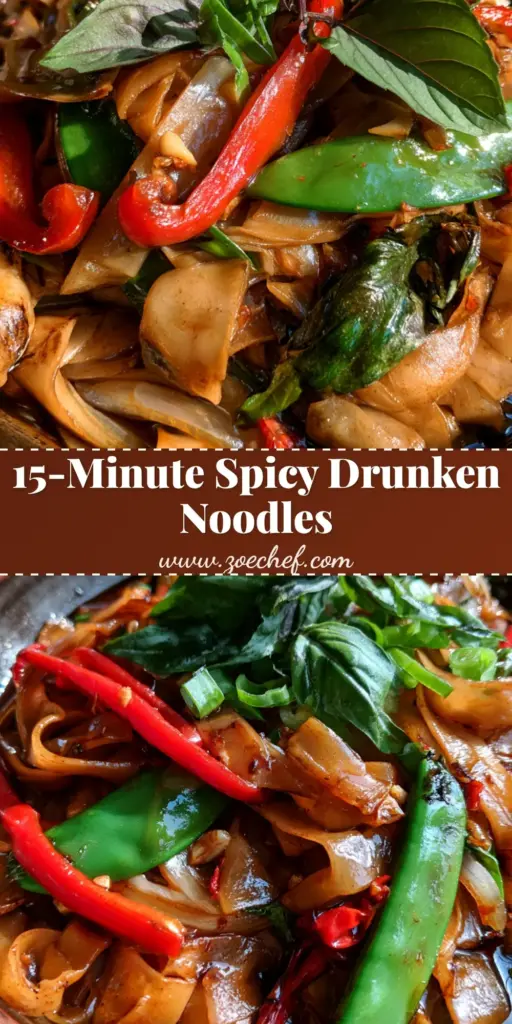
Thai Drunken Noodles (Pad Kee Mao) is the ultimate late-night comfort food, legendary for its bold heat, savory depth, and the iconic “breath of the wok” that defines authentic Thai street food. If you have been searching for that perfect balance of charred wide flat rice noodles and a glistening, umami-rich sauce, you have arrived at the right place. This recipe delivers a restaurant-quality experience right in your own kitchen, complete with the signature oil sheen and aromatic fresh Thai basil leaves that make this dish a Pinterest favorite.
Whether you are a fan of spicy stir-fries or just looking for a way to upgrade your noodle game, these Thai Drunken Noodles (Pad Kee Mao) hit every sensory note. The contrast between the soft, chewy noodles and the crunch of blistered green beans and sliced red bell peppers creates a textural masterpiece. Unlike more subtle noodle dishes like Creamy Garlic Parmesan Orzo, this dish is unapologetically loud, spicy, and satisfyingly salty.
Why These Pad Kee Mao Noodles Are a Total Game Changer
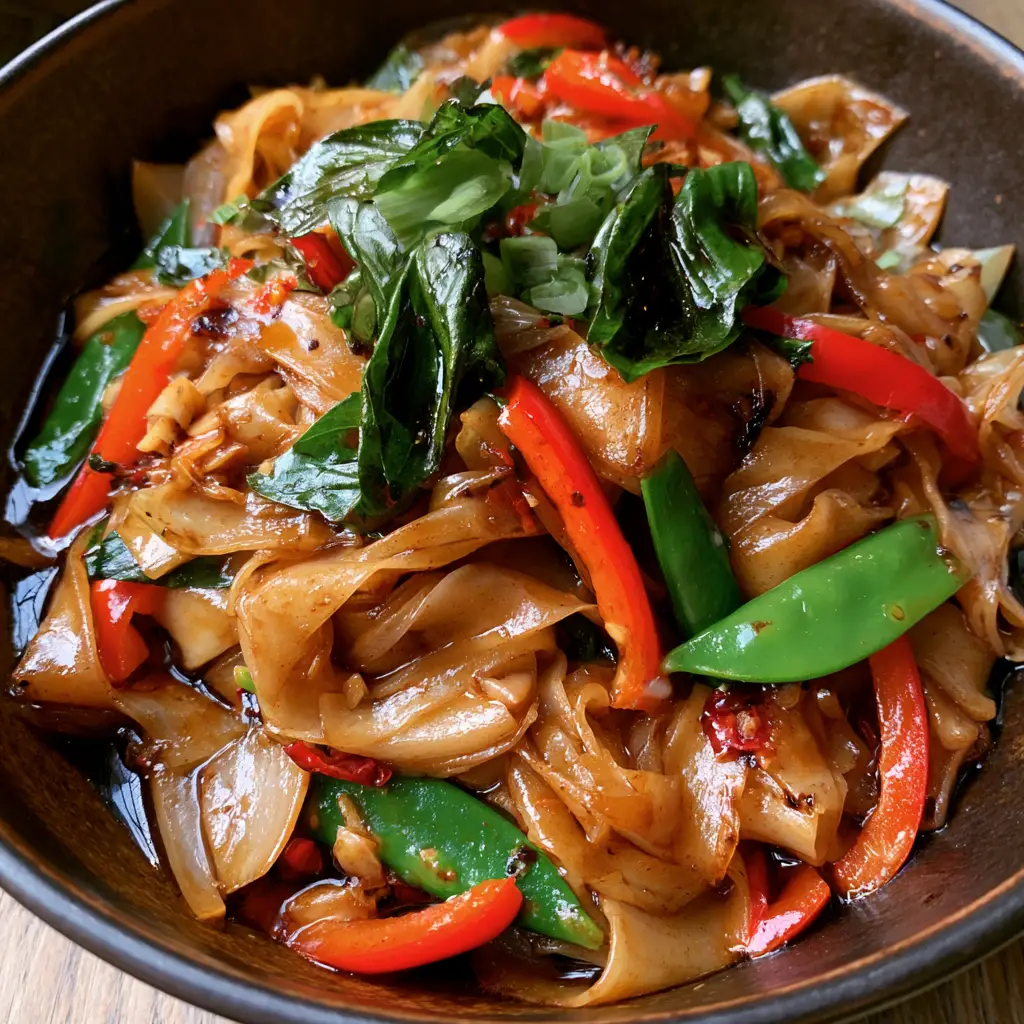
- The Perfect Char: We utilize high-heat techniques to ensure those wide flat rice noodles get the smokey, dark edges that define a true Pad Kee Mao.
- Complex Aromatics: A combination of minced red Thai chilies and a heavy hand of fried garlic bits creates a flavor base that wakes up every taste bud.
- Vibrant Visuals: With bright green beans, vibrant red bell peppers, and deep green Thai basil, this dish looks as good as it tastes.
- Superior Sauce Cling: Our dark soy-based sauce is thin enough to coat every surface with a glistening sheen without becoming gummy or heavy.
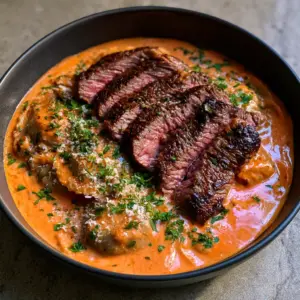
If you love the concept of “drunken” noodles but want a fusion twist, you might also enjoy our Italian Drunken Noodles for a wine-infused alternative. But today, we are sticking to the traditional, fiery roots of the Thai classic.
The Essential Ingredients for Authentic Thai Drunken Noodles (Pad Kee Mao)
To achieve the specific flavor profile of Thai Drunken Noodles (Pad Kee Mao), the quality and type of ingredients matter significantly. Here is what you will need to gather for your mise en place.
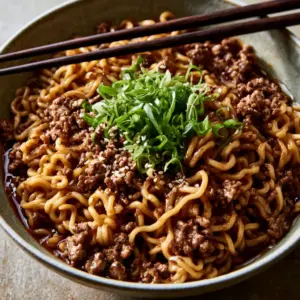
Wide Flat Rice Noodles: You need 12 oz (340g) of dried wide rice noodles or 1 lb (454g) of fresh ones. These are the canvas for the dish. They should be glossy with a dark soy-based sauce once finished. If you can’t find these, you might find yourself gravitating toward Mongolian Ground Beef Noodles, but for Pad Kee Mao, the wide width is non-negotiable.
The “Holy Trinity” of Aromatics: We use 5 cloves of garlic and 4-8 red Thai bird’s eye chilies. This is where the “drunken” heat comes from. The minced red Thai chilies are visible clinging to the noodles in the final presentation.
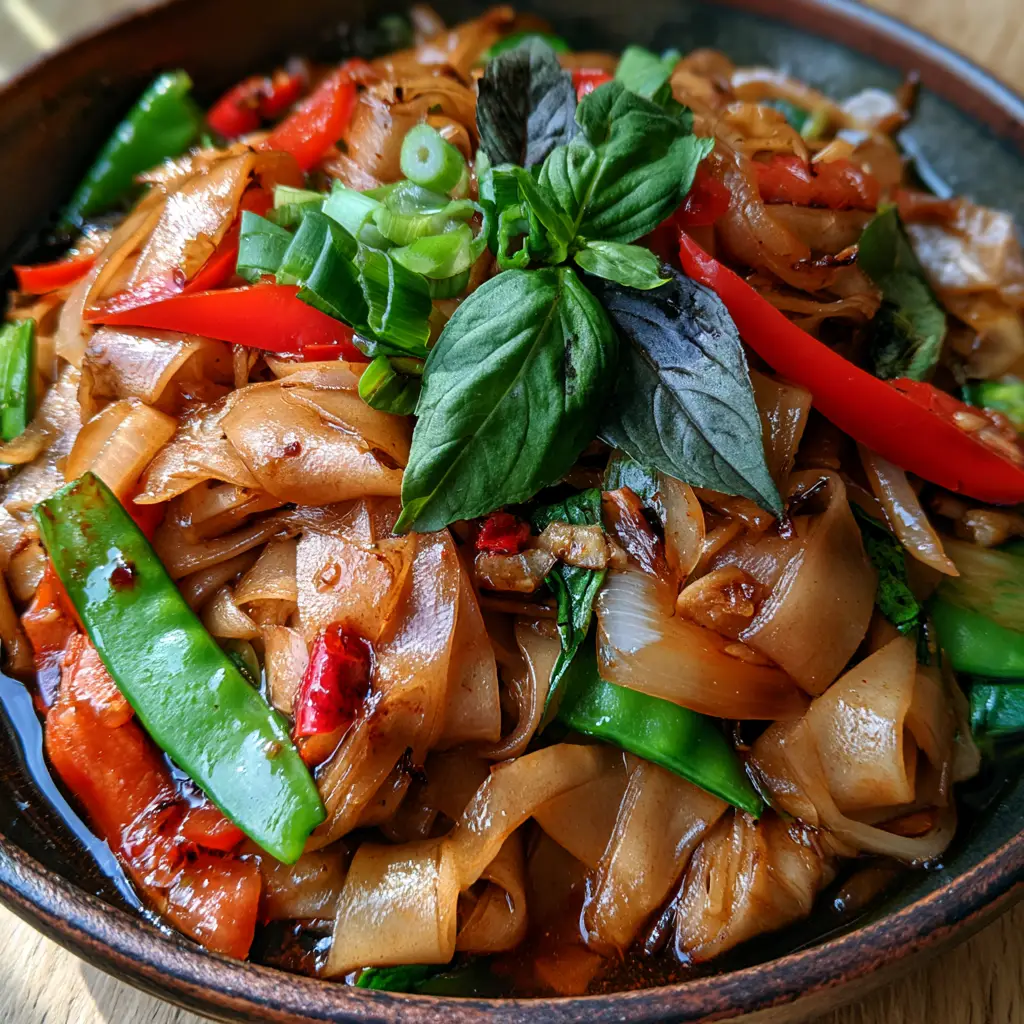
Crisp Vegetables: We use 1 cup (100g) of chopped green beans, 1 large red bell pepper (150g) sliced into strips, and 1 medium white onion (100g) sliced into wedges. The sauteed white onions provide a necessary sweetness to balance the salt.
The Umami Sauce: A blend of oyster sauce, light soy sauce, dark soy sauce, fish sauce, and a touch of palm sugar. The dark soy-based sauce is what provides that deep, mahogany color and the glistening oil sheen.
Fresh Thai Basil: 1 full cup (30g) of fresh Thai basil leaves. Note: Italian basil is not a substitute! Thai basil has a distinct anise-like, peppery flavor that stands up to the heat.
Finishing Touches: A sprinkle of fried garlic bits and sliced green scallions adds the final layer of texture and freshness that Pinterest users love to see.
Mastering the Wok Char: Step-by-Step Instructions
Creating Thai Drunken Noodles (Pad Kee Mao) is less about simmering and more about high-velocity cooking. Follow these steps to ensure your noodles don’t turn into a mushy mess.
Step 1: Prep the Rice Noodles
If using dried noodles, soak them in hot (not boiling) water for 20-30 minutes until they are flexible but still very firm to the bite (al dente). Drain them thoroughly. Excess water is the enemy of the charred wide flat rice noodles effect we want to achieve.
Step 2: The Aromatic Blast
Heat 3 tablespoons (45ml) of high-smoke point oil in a large wok or heavy skillet over high heat. Add the minced red Thai chilies and garlic. Stir-fry for only 30 seconds until the fried garlic bits start to turn golden and the air smells spicy. Be careful not to inhale the chili fumes directly!
Step 3: Blistering the Vegetables
Toss in the sauteed white onions and chopped green beans. Cook for 2 minutes, allowing the high heat to create small char marks on the edges of the beans. Add the sliced red bell peppers last to keep them vibrant and slightly crisp. You want the vegetables to look “blistered” but not soggy.
Step 4: The Noodle Sear
Push the vegetables to the side and add another tablespoon of oil if the pan looks dry. Add the noodles. Let them sit undisturbed for 30-45 seconds to get that dark soy-based sauce caramelization and charred texture. This is similar to the searing technique used in Creamy Garlic Parmesan Beef Bowtie Pasta to lock in flavor.
Step 5: The Sauce Infusion
Pour your pre-mixed sauce over the noodles. Using a wide spatula, toss everything together quickly. The sauce will bubble and thicken almost instantly, coating the noodles in a glistening oil sheen. The minced garlic and red Thai chilies should now be clinging to the wide surface of the noodles.
Step 6: The Basil Finish
Turn off the heat. This is crucial! Toss in the fresh Thai basil leaves and sliced green scallions. The residual heat will wilt the basil just enough to release its oils without losing its dark green color. Serve immediately in a dark rustic bowl.
Expert Tips for the Ultimate Pad Kee Mao
- Don’t Overcrowd the Pan: If you are doubling this recipe, cook it in two batches. Overcrowding leads to steaming rather than searing, and you will lose those charred wide flat rice noodles.
- High Heat is Non-Negotiable: You want the pan screaming hot. The glistening oil sheen comes from the sauce emulsifying with the oil at high temperatures.
- Dark Soy Sauce vs. Light Soy: Dark soy sauce is thicker and less salty; it’s mostly for color and sweetness. Do not swap one for the other, or the dish will be too salty and won’t have that dark brown hue.
- Fresh Noodle Hack: If using fresh noodles, microwave them for 30 seconds to loosen them up before adding to the wok to prevent breakage.
Storage, Reheating & Freezing
Thai Drunken Noodles (Pad Kee Mao) are best enjoyed fresh off the wok. However, if you have leftovers, store them in an airtight container in the refrigerator for up to 3 days. The noodles will continue to absorb the sauce, so they may be less “glossy” the next day.
To Reheat: Add a splash of water or broth to a pan and stir-fry the noodles over medium-high heat until warmed through. Avoid the microwave if possible, as it can make the rice noodles rubbery.
Freezing: We do not recommend freezing this dish. Rice noodles tend to break apart and lose their texture when thawed and reheated from frozen.
What to Serve With Thai Drunken Noodles
Since this dish is so intensely flavored and spicy, it pairs well with cooling sides. A simple cucumber salad or a light soup like Easy Chicken Tortilla Soup (for a fusion night!) can balance the heat.
For a complete Thai feast, serve these noodles alongside a refreshing papaya salad or some crispy spring rolls. If you’re looking for more comfort food to round out the week, consider our One-Pot Chicken Parmesan Pasta for a milder dinner option later in the week.
Frequently Asked Questions
It is not recommended. Thai basil has a distinct licorice and peppery flavor that survives high-heat stir-frying, whereas Italian basil is too sweet and delicate for this dish.
Do not overcook them during the soaking phase. They should be ‘al dente’ (firm) before hitting the wok. Also, use a wide spatula to gently toss rather than vigorous stirring.
Rice noodles are naturally gluten-free, but you must ensure your oyster sauce, soy sauce, and fish sauce are specifically labeled gluten-free, as many brands contain wheat.
You can substitute with a mixture of regular soy sauce and a little molasses or brown sugar, but the color won’t be as deep and the sauce won’t have the same glossy thickness.
There are many theories, but the most popular is that the dish is so spicy that the person eating it needs to drink a lot of alcohol to quench the heat, or that it’s a legendary hangover cure.
The Ultimate Thai Drunken Noodles (Pad Kee Mao) Recipe Card
Thai Drunken Noodles (Pad Kee Mao) With Blistered Vegetables
Ingredients
Equipment
Method
- Soak dried rice noodles in hot water for 20-30 minutes until al dente. Drain and set aside.
- Whisk together oyster sauce, dark soy, light soy, fish sauce, and sugar in a small bowl.
- Heat oil in a wok over high heat. Add garlic and Thai chilies, stir-frying until fragrant (30 seconds).
- Add onions and green beans. Stir-fry for 2 minutes until green beans are blistered and charred.
- Add noodles and sauce. Spread noodles out and let sit for 45 seconds to achieve a dark, smoky char. Toss to coat in the glistening oil sheen.
- Remove from heat. Fold in Thai basil leaves and scallions until just wilted.
Notes
Tip 2. Use Thai Basil specifically; its anise flavor is vital for Pad Kee Mao.
Join the Community & Save!
Did you manage to get that perfect wok char? We want to see your Thai Drunken Noodles (Pad Kee Mao)! Take a handheld smartphone photo—just like the one in our post—and share it in the comments below.
Please leave a 5-star rating if you loved the balance of heat and savory dark soy-based sauce. Don’t forget to Pin this recipe to your favorite Pinterest board so you can find it next time the craving for authentic Thai street food hits! Follow zoe_chef_Official for more high-flavor, high-RPM recipes that bring the world to your kitchen.