Mastering an Authentic Miso Soup Recipe at home is the ultimate gateway to Japanese soul food. There is something deeply restorative about a steaming bowl of opaque yellowish-tan miso dashi broth, swirling with delicate clouds of fermented soybean paste. Whether you are seeking a light lunch or a traditional start to a multi-course dinner, this recipe delivers the exact sensory experience of a high-end Tokyo eatery.
When you look into your bowl, you should see pristine, small cubes of soft white silken tofu nestled alongside dark green, delicate ribbons of rehydrated wakame seaweed. A handful of thinly sliced, bright green and white scallion rings adds the perfect crunch and bite to the surface. It’s not just soup; it’s a balanced ecosystem of flavors that you can create in under 15 minutes.
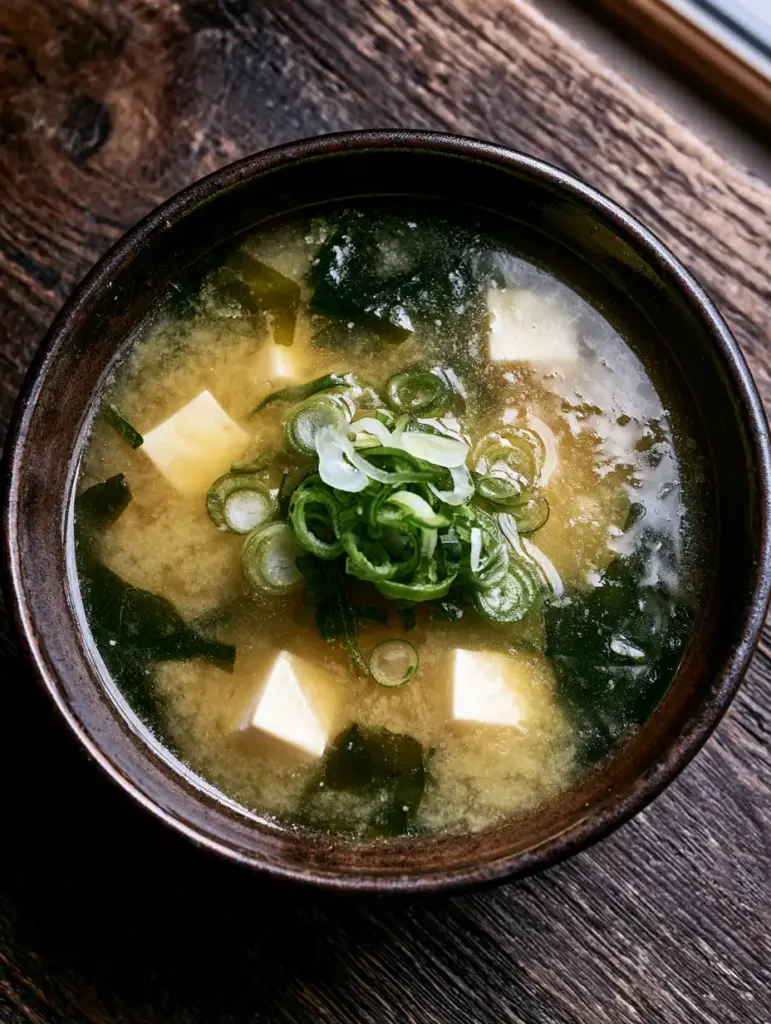
Why This Authentic Miso Soup Recipe Works
- Visual Texture: We achieve the classic “cloudy” look using a specific whisking technique that preserves the miso’s probiotics.
- The Dashi Foundation: By using a proper base, we ensure a deep oceanic flavor that complements Easy Homemade Ramen.
- Silken Consistency: We use silken tofu specifically for that melt-in-your-mouth experience that contrasts with the chewy wakame ribbons.
- Pinterest-Perfect Presentation: This dish is styled to look exactly like a handheld smartphone photo taken in soft, natural daylight.
Essential Components for a Traditional Miso Bowl
To achieve the best results with this Authentic Miso Soup Recipe, the quality of your ingredients is paramount. Unlike a heavy Polish Stuffed Cabbage Soup, miso soup relies on the clarity and purity of its components.
Dashi (Japanese Soup Stock): The backbone of the recipe. You can use 4 cups (950ml) of water with dashi granules or make it from scratch with kombu and katsuobushi for the most authentic flavor.
Miso Paste: Use 3-4 tablespoons (50-70g) of high-quality miso. White miso (Shiro) is sweeter and milder, while Red miso (Aka) is saltier and more pungent. Most home cooks prefer an Awase (mixed) miso for balance.
Silken Tofu: You will need 1/2 block (approx. 7oz/200g) of soft white silken tofu. Cutting them into uniform 1/2-inch cubes ensures they float beautifully in the broth.
Dried Wakame Seaweed: Just 1 tablespoon (2g) of dried ribbons is enough, as they expand significantly when rehydrated into dark green ribbons.
Green Onions (Scallions): 2 stalks, thinly sliced. These provide the essential fresh aroma and bright green visual pop against the tan broth.
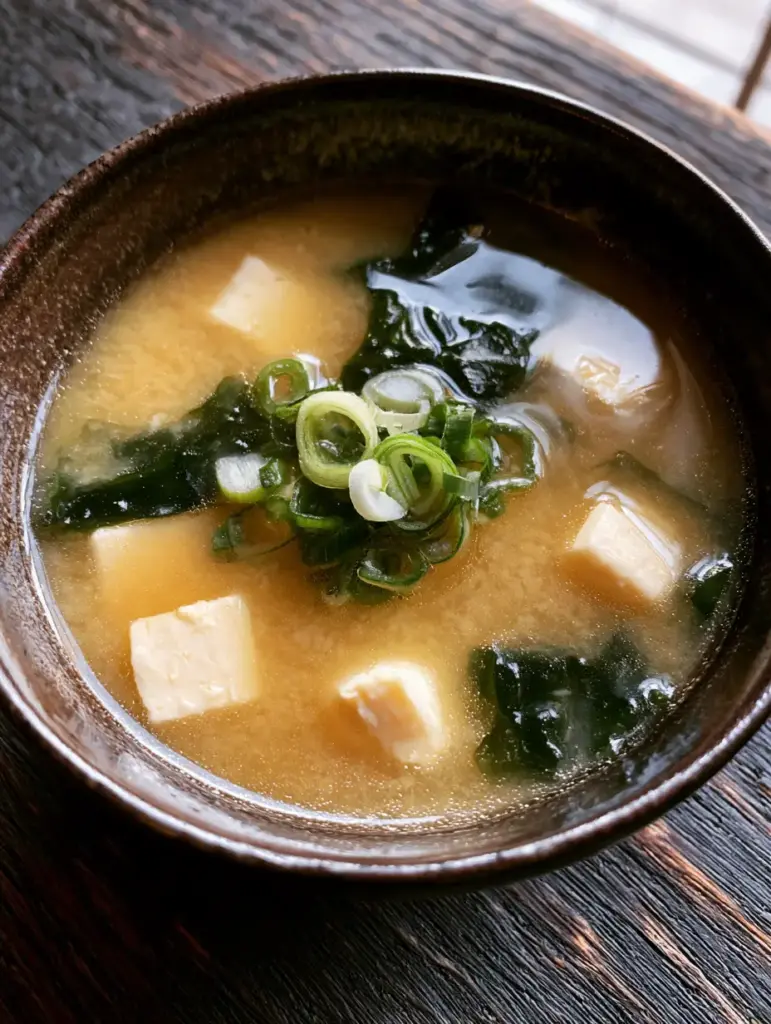
How to Make Miso Soup Step-by-Step
1. Preparing the Dashi Base
In a medium saucepan, bring 4 cups (950ml) of water to a gentle simmer. If using instant dashi, whisk in the granules until fully dissolved. For a scratch-made version, steep a piece of kombu and then strain out katsuobushi flakes to create a clear, savory liquid.
2. Rehydrating the Seaweed and Tofu
Add the dried wakame ribbons directly into the simmering dashi. They will unfurl within 1-2 minutes. Gently slide in the cubed soft white silken tofu. Be careful not to stir too vigorously, as silken tofu is fragile and can break apart easily.
3. The Miso Dissolving Technique
CRITICAL STEP: Turn off the heat. Never boil miso paste, as it kills the healthy enzymes and ruins the flavor profile. Place your miso paste into a small fine-mesh strainer and partially submerge it in the hot dashi. Use a spoon to rub the paste through the mesh until it dissolves into an opaque, cloudy broth.
4. Final Garnish and Serve
Ladle the soup into traditional dark brown Japanese ceramic bowls. Ensure each bowl gets a fair share of tofu cubes and seaweed ribbons. Top generously with the fresh green onion rings. Serve immediately while the miso is still swirling in the dashi.
Expert Tips for Success
- Don’t Boil the Miso: I cannot stress this enough. High heat changes the chemical structure of fermented soy, turning it bitter.
- Slicing Matters: Use a very sharp knife for the scallion rings to prevent bruising the delicate greens.
- Pairing Suggestion: This light soup is the perfect palate cleanser when served alongside Crispy Fried Fish or a spicy Bang Bang Chicken.
- Tofu Handling: Drain your silken tofu on a paper towel for 2 minutes before cubing to remove excess water that might dilute the broth.
Storage, Reheating & Freezing
Storage: Miso soup is best enjoyed fresh. However, you can store leftovers in an airtight container in the fridge for up to 2 days. Reheating: Warm it gently on the stove over low heat. Do not let it reach a rolling boil.
Freezing: I do not recommend freezing this Authentic Miso Soup Recipe. Tofu changes texture significantly when frozen (becoming spongy), and the delicate aromatics of the miso will dissipate.
What to Serve With This
This soup is a versatile side dish. For a full Japanese-inspired spread, serve it with a bowl of steamed rice and Gochujang Chicken for a fusion twist. If you want a more traditional pairing, it goes beautifully with grilled mackerel or a light cucumber salad.
Frequently Asked Questions
No, you should never boil miso soup once the paste is added. Boiling destroys the complex flavors and beneficial probiotics of the fermented miso.
You can, but silken tofu is traditional because its delicate texture complements the light broth. Firm tofu will hold its shape better but won’t have the same melt-in-your-mouth feel.
It depends on the dashi. Traditional dashi uses bonito flakes (fish). To make it vegan, use a kombu (seaweed) only dashi or a vegetable-based stock.
For a classic taste, use Awase miso, which is a blend of white and red. White miso is milder, while red is stronger and saltier.
It is natural for miso to settle at the bottom of the bowl. Simply give it a quick stir with your chopsticks or spoon to bring back that cloudy appearance.
The Authentic Miso Soup Recipe Card
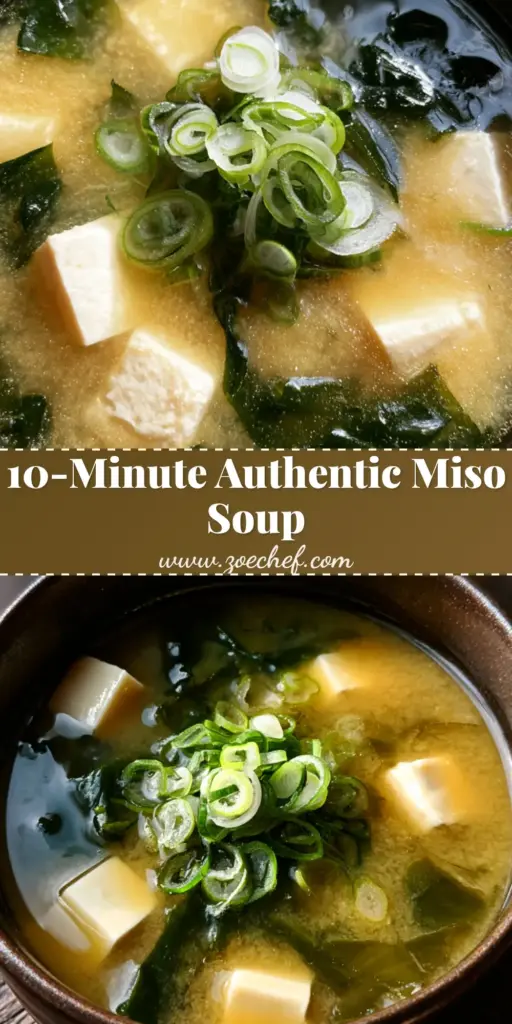
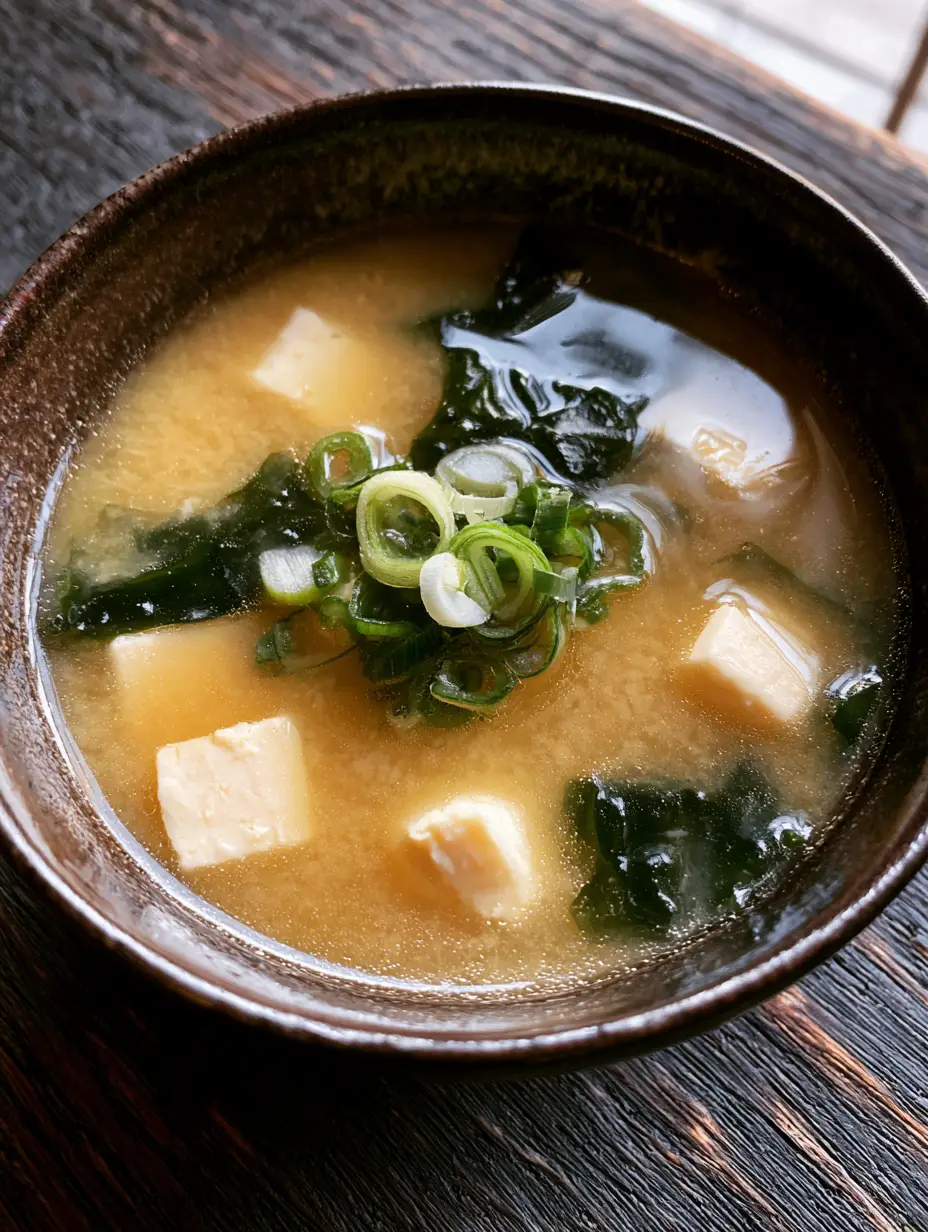
Authentic Miso Soup Recipe: The Secret to Perfect Japanese Umami
Ingredients
Equipment
Method
- In a saucepan, bring the dashi stock to a gentle simmer over medium heat.
- Add the dried wakame ribbons and cubed silken tofu. Simmer for 1-2 minutes until the seaweed unfurls and tofu is warmed through.
- Turn off the heat. Place miso paste in a strainer and whisk into the broth until fully dissolved and opaque.
- Ladle into bowls and top with thinly sliced green onions. Serve immediately.
Notes
Use silken tofu for the most traditional texture.
Join the Community!
If you loved this Authentic Miso Soup Recipe, please save it to your Pinterest boards so you can find it later! I would love to see your recreations—tag @zoe_chef_Official or upload a photo in the comments below. Don’t forget to leave a 5-star rating if this hit the spot for you today!